Improves Communication And Expression
Supports Emotional Wellbeing And Confidence
Helps Reduce Anxiety, Stress And Pain

Music Therapy at Smart Rehabilitation
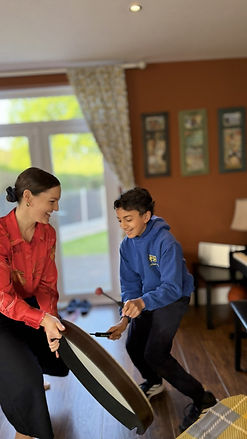
Music therapy is a creative and active process that focuses on the development of communication, movement, cognition, speech and language, as well as emotional well-being for clients across Sheffield, Nottinghamshire and West Yorkshire. Through the implementation of improvisation, precomposed music, music listening, and carefully crafted Neurologic Music Therapy (NMT) techniques, clients are encouraged to sing and play various percussion and melodic instruments while incorporating movement. The music therapy approach at Smart Rehabilitation is person-centred, holistic and humanistic alongside being informed by Neurologic Music Therapy (NMT). Neurologic Music Therapy (NMT) uses specifically crafted techniques to address individualised goals to develop speech and language, cognition and sensorimotor functioning. This approach aims to encourage change and enable the clients to develop the resources they need to grow and maintain a positive sense of wellbeing.
At Smart Rehabilitation music therapy sessions are uniquely personalised and developed from clients’ individual presentations and goals to optimise therapeutic outcomes. Clients are encouraged to become active participants within the music-making, directly impacting their therapeutic journey. This approach further aims to support clients to experience agency. Emotional wellbeing and social connection, alongside experiencing their strengths, potentials and capabilities, are essential for navigating a challenging recovery journey.


Welcome to Music Therapy
Welcome to Music Therapy
The warmest welcome to music therapy. Following your referral, often a range of questions can
arise about how music therapy sessions work and what to expect. Here are questions and answers
that will hopefully provide you with additional information in advance of starting music therapy. I’m very
much looking forward to meeting and working with you.

What Is Music Therapy?
Music therapy is an active and creative form of therapy which centres around us making music
together. This can include music listening, improvising, singing, song writing, and exploring the
music meaningful and important to you. Working creatively together enables you to actively
participate, shape and inform your therapeutic journey. Contact us today to get more information.

What Could We Work Toward In Music Therapy?
Our work together will be personalised and unique to you. Your therapeutic aims and goals will be developed and informed by what you feel is most important, along with being guided by your strengths, capabilities and potentials. Our work together could explore the development of speech and language skills, facilitate movement and movement co-ordination, support cognitive functioning, reduce anxiety and stress, help to manage pain and discomfort, build relationships and social connection, and support emotional well-being.

What Will Happen In Our Assessment Session?
We will begin with a music therapy assessment. This is an opportunity for us to initially get to know each other and to explore how music therapy can support you and your rehabilitation journey effectively. Music therapy can include many different components; therefore, we will initially spend time sharing and learning about your hopes, wishes and aspirations for music therapy. This starts to inform the direction our work might take. We will begin with sharing thoughts exploring what’s important to you, why music is meaningful to you, and how you already use music in your everyday life. The assessment will include getting creative and making some music together through playing a variety of instruments or singing. Working in this way is valuable, as it can reveal important insights that might not emerge through conversation alone. Following the assessment I will write a report summarising our work together and considering how music therapy could best support you.
What Will Happen In Our Music Therapy Sessions?
An individualised and personalised music therapy session plan will be developed to shape and direct our work. Each session will be unique to you, informed by your personality and preferences, specific needs and areas for development. During each session we will both play a range of instruments, including drums, percussion, piano,
guitar, xylophone and our voices. I will support and encourage you to explore the instruments and your voice in your own unique way. As our work and the therapeutic relationship develop, opportunities to invite change, progression and reflection will begin to be explored. The music played will combine the music meaningful to you along with specific therapeutic exercises or activities, improvisation, and pre-composed songs.

How will development and progress be measured?
We regularly ask you for your thoughts, reflections and feedback on our work and therapeutic journey together. Careful observations and evaluations will take place, along with written sessions. notes, analysis of audio or video recordings (where consent is given), documenting changes, celebrating achievements and adapting or modifying our approach as needed. This ongoing evaluation ensures that our work remains responsive to your evolving needs. We will develop an overarching review of progress and changes taking place and further summarise these in written reports and verbal reviews.
Do I need to be a musician or have previous musical training to attend music therapy?
You do not need to provide any musical instruments; We will provide them for each session.
What Measures Are In Place To Mitigate Risk, Health And Safety?
Our practice and approach are committed to reducing risks, incidents, and infections. A range of measures and safe working practices are in place and will remain throughout our music therapy work. Before attending face-to-face sessions in any setting, a risk assessment will be carried out, and the protective measures to be implemented during sessions will be agreed upon. These include monitoring to ensure we are well and fit to work and wearing personal protective equipment where necessary (face coverings, gloves, etc.); sanitising instruments before and after each session; removing and reducing any hazards to mitigate risks; and ensuring all electrical equipment is PAT tested by a certified professional.
Frequently Asked Questions
- 01
- 02
- 03
- 04
- 05
- 06
- 07
Discover the Power of Music in Rehabilitation
Get in touch to explore personalised music therapy sessions that support communication, wellbeing, and meaningful progress.